
The body must be supported before the mind can roam.
A Room of Her Own
“A woman must have money and a room of her own if she is to write fiction.”
— A Room of One’s Own by Virginia Woolfe
Nearly a century later since Virginia Woolf wrote A Room of One’s Own, and the conditions have changed in shape but not in essence.
This essay gathers the modern equivalents of Woolf’s two requirements: material independence and private sovereignty, the twin pillars without which a creative life collapses into silence. This is not a manifesto. It is a diagnostic instrument and a way of uncovering the forces that continue to thin imagination, scatter attention and bury potential under obligation.
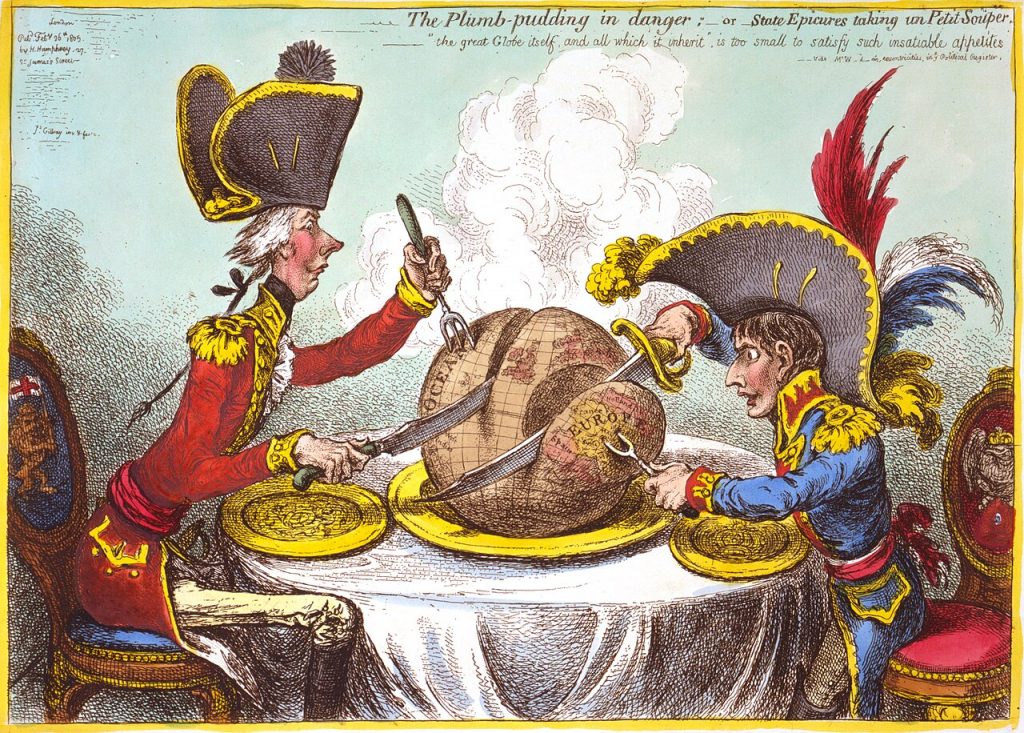
London : H. Humphrey, February 26, 1805
What the World told Women Creativity Required
For centuries, the prevailing narrative insisted that genius was a matter of innate brilliance, divine favour, or moral purity. Women were told they lacked the temperament, the intellect, or the “greatness of soul” required for art. Their absence from literature was treated as evidence of incapacity rather than exclusion. This story was tidy and it was also false.
In contrast, Woolf’s thesis was disarmingly simple:
Intellectual freedom depends on material conditions. A steady income (she named £500 a year) and a private, lockable room were prerequisites, not luxuries. Invariably, without them, the mind remains in survival mode, unable to stretch, wander or risk.
To Woolfe the evidence was everywhere. Women were denied education, privacy, time and the right to keep their own earnings. Therefore, the absence of women’s writing was not a profound mystery, it was an engineered outcome.
Woolf’s most haunting device was William Shakespeare’s sister Judith, described as being as brilliant as her brother, but barred from grammar school, mocked for her ambition, trapped in domestic labour and ultimately extinguished by a world that refused her existence. Judith was not a character created by Woolf but rather a composite of thousands of real women whose manuscripts were never begun, whose sentences were interrupted and whose gifts were domesticated into oblivion.
Their silence was not natural. It was enforced.
THE MODERN CORROBORATION
Nearly a century after Woolf’s lectures at Girton and Newnham, the data remains stubborn. Women still perform the majority of unpaid domestic labour, they still earn less, globally and locally, still have less uninterrupted time and still face cultural expectations that creativity be secondary to care.
Although the forms have changed, the mechanism has not. The room is still contested, the income is still conditional and the imagination is still asked to bloom in soil that is not its own.
What must be said plainly is that a woman’s creative life is not a miracle. It is a consequence of conditions. Give her time, privacy, financial autonomy and the right to her own interiority and the work will come. Deny her these, and the world loses books, ideas, inventions, and histories that should have existed.
This tragedy is not individual, it is civilisational. 1